
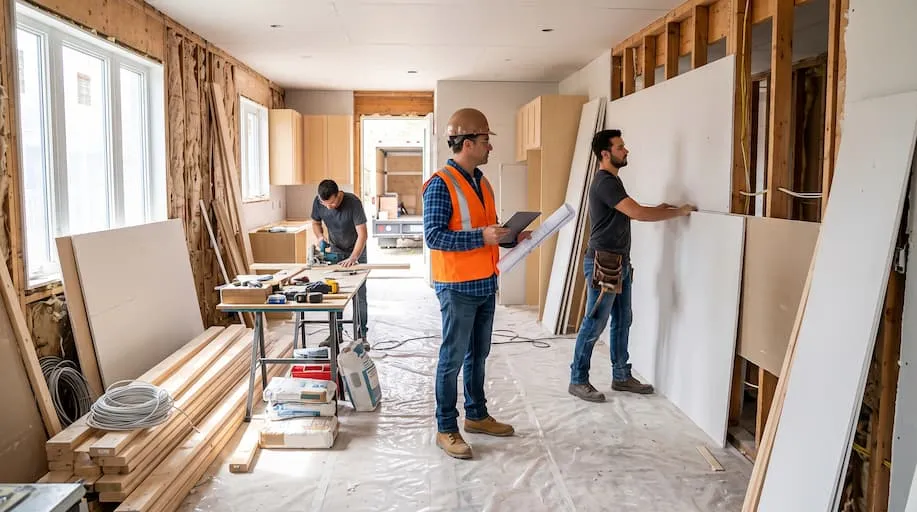
Settle the rules with your owners corporation before work starts, then build them into your builder’s plan: approved working hours, protected lifts and common areas, fixed delivery and waste windows, and early notice for neighbours. Agreeing these details in writing keeps an apartment renovation running smoothly in a shared building.
Key Takeaways
- Strata approval is your chance to agree access, working hours and noise conditions in writing.
- Book lifts and loading areas, protect shared spaces and keep deliveries and waste to set windows.
- Schedule the noisiest stages inside approved hours and tell neighbours before they start.
- Record the condition of common areas first, and check older buildings for asbestos before demolition.
What does your building need to approve before work starts?
Most apartment renovations need some form of strata approval, and the level depends on the work. Under the NSW Government’s strata renovation rules, cosmetic work needs no approval and minor work, such as a kitchen renovation, needs approval from the owners corporation or strata committee.
Major work needs a special resolution at a general meeting. That includes a bathroom renovation, because it involves waterproofing, and anything that affects the structure or outside of the building.
A minor renovation request must include plans with dates and times, tradesperson qualifications and, for flooring, an acoustic certificate showing sound insulation. Committees commonly also ask for insurance certificates and a work method statement. Council approval is a separate process, covered in our guide to DA and CDC approvals.
How do you manage access, lifts and deliveries?
Agree a written access plan with the building manager or strata committee, and make sure your builder follows it.
Inside the building
Book lift and loading dock time through the building manager, protect lifts, corridors and entry areas, and keep materials out of shared spaces. Fixed windows for deliveries and waste removal reduce disruption to other residents. Many buildings have their own rules for lift use and loading, so check the by-laws before you finalise the schedule.
On the street
Skip bins, work vehicles and stored materials on a public road or footpath often need council permission. North Sydney, Mosman and Northern Beaches councils each regulate skip bins on public roads, so check the requirements before booking one.
How do you keep renovation noise under control?
Keep noisy work inside agreed hours, schedule the loudest stages deliberately and tell neighbours in advance.
The NSW EPA recommends standard construction hours of 7 am to 6 pm on weekdays and 8 am to 1 pm on Saturdays, with no work on Sundays or public holidays. These are guideline hours, so your council, development consent or building rules may set different ones. Follow the strictest hours that apply.
Demolition, hammering and cutting are usually the loudest stages. Confirm when they will happen and group them together where possible. Our guide to planning a renovation timeline explains how to sequence noisy work.
How do you protect shared areas and neighbours?
Record the condition of common areas first, contain dust and water, and keep residents informed.
Take dated photos of lifts, corridors and entries before work begins, so any damage can be identified and resolved quickly. Use dust barriers, clean shared areas daily and give neighbours notice before water or power is isolated.
Buildings from before the late 1980s may contain asbestos, so check before demolition. SafeWork NSW requires a licensed professional to remove friable asbestos and more than 10 square metres of non-friable asbestos, which can affect your timeline.
What should you ask a builder before you sign?
Ask for a written site plan that covers hours, lift use, deliveries, waste and neighbour communication. Then check the following:
- Apartment experience and a current contractor licence, which NSW strata renovation rules require.
- Insurance certificates and a work method statement your strata committee can review.
- A single contact for the building manager and neighbours.
- How noisy stages, utility shutoffs and common-area protection will be handled.
Planning the logistics before day one
A well-run apartment renovation is largely decided before the first trade arrives: the approvals, the access plan and the notice given to neighbours.
Faber Homes, based in Dee Why, renovates apartments and houses across Sydney’s North Shore and Northern Beaches. If you are planning an apartment renovation, contact Faber Homes to talk through the access and approvals your building will need.