
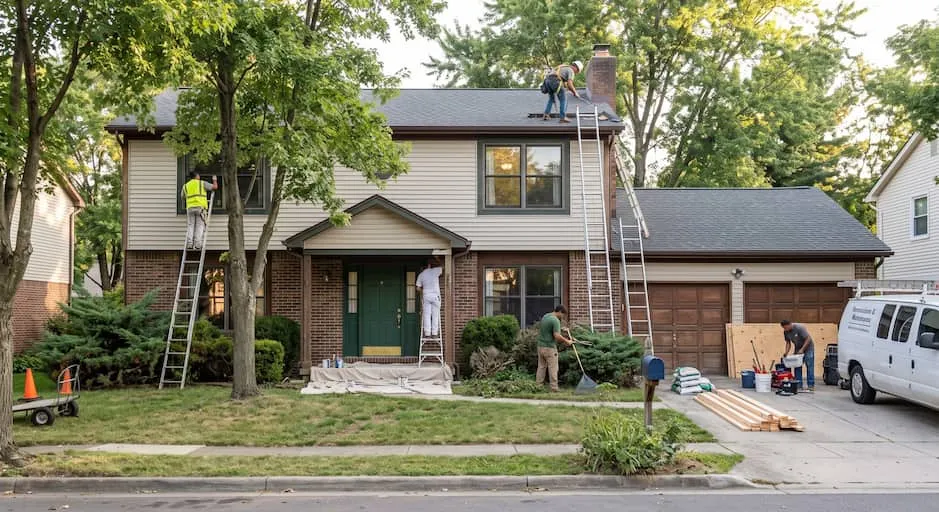
Preserve the original features that give an older home its character and are still sound, replace anything unsafe or failing, and upgrade what affects comfort and daily use. The right balance depends on the home’s condition, age and heritage status, so a good home renovation starts with finding out what is behind the walls.
Key Takeaways
- Preserve features that are structurally sound and central to the home’s character, and repair them before replacing them.
- Replace anything unsafe or failing, including old wiring, leaking pipes, failed waterproofing and asbestos-containing materials.
- Upgrade kitchens, bathrooms and layouts where they improve daily living, without erasing character.
- Heritage status and hazardous materials can change your approvals pathway and budget, so check them first.
Which features of an older home are worth preserving?
Preserve features that are structurally sound, hard to reproduce and central to the home’s character. In a Federation, inter-war or sandstone home, that usually means solid masonry, original timber floors, plaster ceilings and cornices, and well-made joinery.
Repair before you replace. Timber floors can be sanded and refinished, original windows can often be reglazed and re-hung, and plasterwork can be patched to match.
The test is condition, not age. A rotted, badly cracked or unsafe feature should not be kept for sentiment alone.
What should you replace rather than repair?
Replace anything that is unsafe, has failed or cannot meet current standards.
Wiring, plumbing and wet areas
Old wiring and ageing pipework are common replacements, and both are licensed trades in NSW. An electrician must issue a Certificate of Compliance Electrical Work, and altered circuits generally need to meet current standards, including safety switch protection.
Bathrooms and laundries in older homes may not meet today’s waterproofing standard, AS 3740 (Waterproofing of domestic wet areas), so tiles that look fine can hide a failing membrane. Persistent water ingress or recurring defects usually call for remedial building work rather than a cosmetic repair.
Asbestos and lead paint
Homes built before the late 1980s may contain asbestos, often in fibre cement sheeting. Under SafeWork NSW rules, friable asbestos and more than 10 square metres of non-friable (bonded) asbestos must be removed by a licensed professional, and SafeWork NSW recommends one for any amount.
Lead paint was used in most Australian homes built before 1970. Avoid dry sanding old paint, and use trained professionals if it needs to be removed.
What is worth upgrading without losing character?
Upgrade the parts of the home that shape how you live, and keep the parts that shape how it looks from the street. Kitchens and bathrooms are the usual starting points, because older layouts and fittings rarely suit how families cook, wash and entertain today.
A bathroom renovation also gives you the chance to bring plumbing, waterproofing and ventilation up to current standards in one stage of work.
Opening a kitchen to a living area can transform an older floor plan, but confirm what is structural first. Out-of-sight upgrades, such as insulation and lighting, improve comfort without changing the home’s character.
Do you need council approval to renovate an older Sydney home?
It depends on the scope of the work and whether the property is heritage listed or in a heritage conservation area. Larger or external changes usually need one of two approvals:
- A development application (DA) is assessed by your local council and suits larger or more complex projects.
- A complying development certificate (CDC) is a fast-track approval for straightforward work that meets set standards, and the NSW Planning Portal says it can be issued within 20 days.
Complying development generally cannot be carried out on a heritage item or in a heritage conservation area, with some exceptions, so period homes often need a DA. Mosman, for example, has several heritage conservation areas, and the NSW Planning Portal’s ePlanning Spatial Viewer shows whether a property is affected.
A registered certifier, whether council or private, then checks the work against the National Construction Code and issues the required certificates.
How do you plan and budget for surprises in an older home?
Investigate first, design second and keep a contingency. Older homes rarely reveal every problem until walls and floors are opened, so allow for decisions to change.
Check for hazardous materials, water damage and structural movement before the design is locked in. Fix structure, waterproofing and services before finishes.
In NSW, residential building work worth more than $5,000 needs a licensed builder or tradesperson and a written contract. Work worth more than $20,000 needs home building compensation cover, which the builder must show you before taking any money, including a deposit.
Deciding what your older home needs
Every older home sits somewhere between keeping what is there and starting again, and the decision comes down to what is sound, what is failing and what you want to live with.
Faber Homes, based in Dee Why, works with homeowners across Sydney’s Northern Beaches and North Shore. If you are weighing up a renovation, contact Faber Homes to talk through what your home needs.